John Bussolari – Vice President, Healthcare
During the Annual Enrollment Period, the healthcare industry talks constantly about “digital transformation,” but one reality remains consistent: when member communications become exclusively digital, the member experience often becomes more fragmented, less trusted, and less effective.
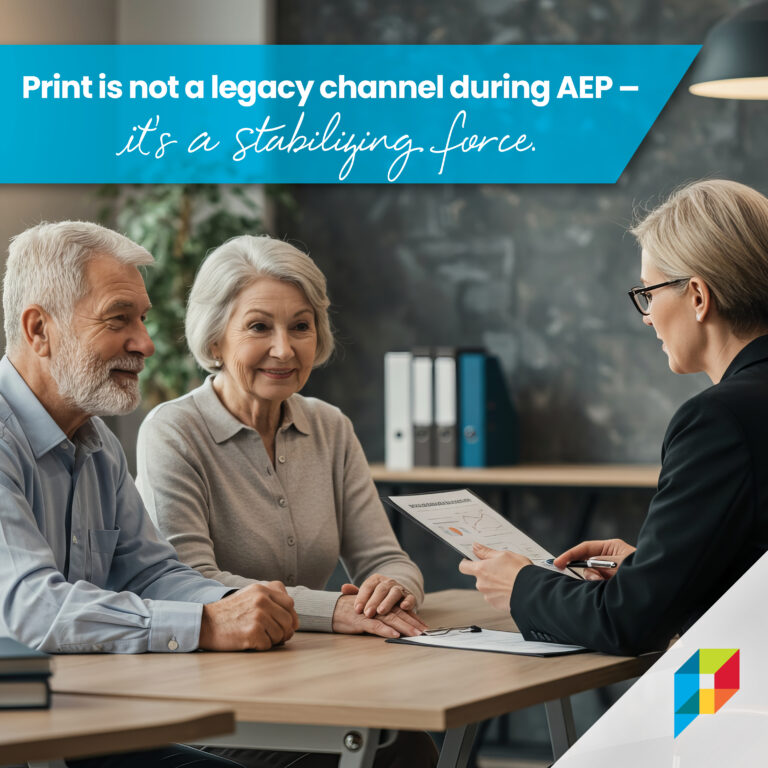
Print is not simply a legacy channel during AEP. It is a stabilizing force in one of the most overwhelming decision-making periods members face all year.
Members are navigating plan changes, benefit comparisons, provider access, prescription coverage, deadlines, and compliance-driven decisions — all while being bombarded with emails, texts, ads, portals, and call center outreach. In that environment, physical communications create something increasingly rare: attention, credibility, and permanence.
Research consistently supports this:
- Direct mail response rates continue to outperform many digital channels, particularly among Medicare-age populations.
- Printed healthcare communications are often perceived as more trustworthy and easier to reference when making enrollment decisions.
- Multichannel campaigns that include print drive higher engagement and conversion than digital-only campaigns.
- Members frequently retain printed materials for future reference, reducing confusion and improving plan comprehension throughout the enrollment cycle.
What changes when print disappears from the AEP experience?
First, trust erodes.
Healthcare decisions are deeply personal and often high stakes. A printed enrollment guide or personalized communication signals legitimacy in ways that transient digital notifications often cannot. Members may ignore emails, overlook portal messages, or become overwhelmed by fragmented outreach. Print cuts through noise because it feels intentional and tangible.
Second, accessibility declines.
Not every member interacts with technology the same way. Even digitally engaged consumers benefit from physical materials that simplify comparison and decision-making. Print allows members to review information at their own pace, share with spouses or caregivers, annotate options, and revisit details without navigating multiple digital systems.
Third, engagement becomes shorter-lived.
Digital communications are often consumed and forgotten in seconds. Print creates a persistent presence in the home. A mail piece on the kitchen table continues the conversation long after an email disappears beneath dozens of new messages.
Most importantly, outcomes suffer when communication strategies become channel-biased instead of member-centered.
The future of member engagement is not “print versus digital.” The strongest AEP experiences integrate channels intelligently:
- Personalized direct mail driving digital action
- QR-enabled print experiences
- Dynamic messaging aligned across email, web, SMS, and print
- Data-driven segmentation determines when physical communications create the greatest impact
Traditional channels become innovative when used intentionally. And newer channels become ineffective when they lack coordination, trust, or relevance.
The organizations creating the best member experiences during AEP are not abandoning print. They are redefining how print works inside a connected engagement ecosystem.
Because in healthcare communications, the goal is not simply delivery.
It is confidence, clarity, action, and trust.